
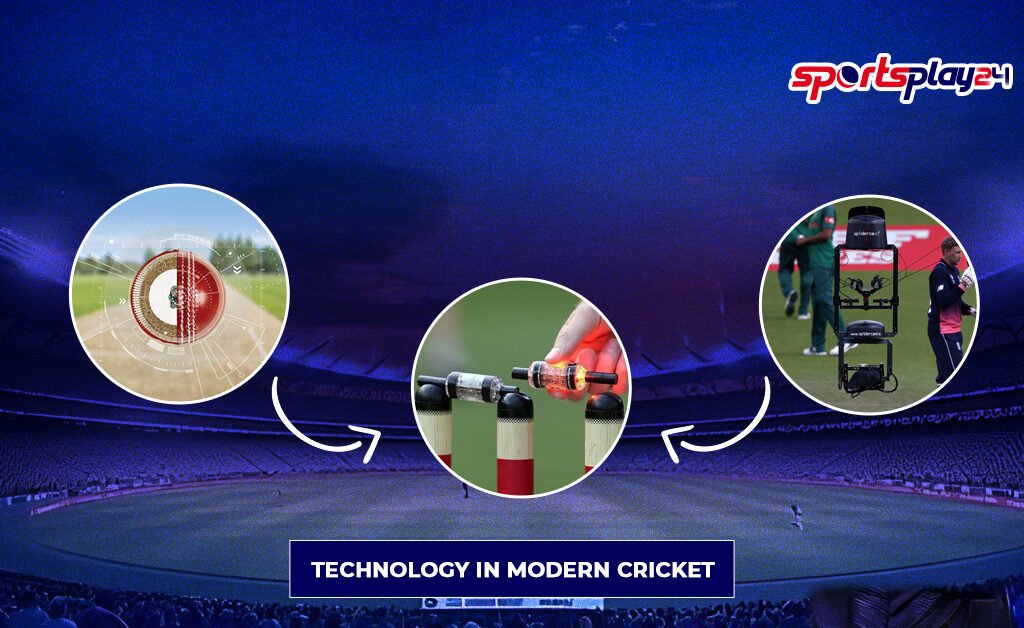
Cricket has evolved far beyond traditional techniques, and Technology in Modern Cricket now plays a vital role in shaping the game. From accurate umpiring decisions to advanced performance analysis, technology helps teams, players, and officials make smarter decisions on the field. Innovations such as Hawk-Eye, UltraEdge, LED bales, and high-speed cameras have improved fairness and enhanced the viewing experience for fans worldwide. As cricket continues to grow across formats like Tests, ODIs, and T20 leagues, technological advancements remain central to the sport’s progress.
In the next section, we will explore the key technologies that are transforming modern cricket.
Key Technologies that are transforming Modern Cricket
Floodlights
Floodlights are one of the earliest and most important examples of Technology in Modern Cricket. They made day-night cricket possible and changed how matches are scheduled worldwide. Modern cricket stadiums use powerful LED floodlights that provide uniform lighting across the field. It ensures players can see the ball clearly during fast deliveries, high catches, and boundary shots.
Key Features
- Enable day-night international and league matches
- Provide bright, uniform lighting across the ground
- Improve visibility for players and umpires
- Enhance television broadcast quality
- Allow prime-time scheduling for global audiences
Hawk-Eye Technology
Hawk-Eye technology is one of the most influential tools used in Technology in Modern Cricket. It uses several high-speed cameras placed around the stadium to track the ball’s movement from the bowler’s hand to the batter. The system predicts the ball’s future path and helps determine whether it will hit the stumps.
Key Features
- Tracks ball trajectory using multiple cameras
- Predicts the path for LBW decisions in DRS
- Helps analysts study bowling patterns
- Assists teams with field placement strategy
- Provides visual graphics during broadcasts
Decision Review System (DRS)
The Decision Review System (DRS) is a major innovation in Technology in Modern Cricket that allows players to challenge on-field umpire decisions. Introduced in international cricket in 2008, DRS combines several technologies such as Hawk-Eye, UltraEdge, and ball-tracking systems. Captains or batters can request a review when they believe an incorrect decision was made.
Key Features
- Allows teams to challenge umpire decisions
- Uses Hawk-Eye, UltraEdge, and replay systems
- Improves accuracy in LBW and caught appeals
- Reduces controversial umpiring decisions
- Adds tactical strategy for captains
UltraEdge
UltraEdge, previously known as the Snicko-meter, detects faint edges between the bat and ball. It works by synchronizing audio signals with high-speed video footage. When the ball touches the bat, the system shows a spike in the sound wave graph. This technology is widely used in DRS reviews for caught-behind decisions.
Key Features
- Detects bat-ball contact using sound analysis
- Displays audio spikes during edges
- Used by third umpires in DRS reviews
- Helps confirm faint edges clearly
- Reduces controversial caught-behind appeals
Also read: Meet the Best Partnerships in T20 World Cup 2026
REV Counter
The REV Counter measures how many revolutions per minute a spinning cricket ball makes after leaving the bowler’s hand. Higher revolutions usually indicate stronger spin, which can create more turn and bounce on the pitch. Broadcasters often display REV numbers to help viewers understand the quality of spin bowling.
Key Features
- Measures spin revolutions per minute
- Helps analyze spinner effectiveness
- Displays real-time spin statistics
- Assists commentators and analysts
- Provides insight into bowling techniques
Spider Cam
Spider Cam is a cable-suspended camera system that moves above the cricket field and captures unique aerial shots. This technology has revolutionized sports broadcasting by offering dramatic camera angles and dynamic visuals. Viewers can see field placements, bowler run-ups, and boundary shots from perspectives that were previously impossible.
Key Features
- Captures aerial and moving camera angles
- Provides cinematic visuals during matches
- Tracks players and ball movement
- Shows detailed field placements
- Enhances overall broadcast experience
Hot Spot
Hot Spot technology uses infrared cameras to detect heat marks created when the ball hits the bat or pad. When friction occurs, the contact area appears as a bright mark on the screen. It helps confirm whether a batter edged the ball before it reached the wicketkeeper or slips.
Key Features
- Uses infrared imaging to detect contact
- Shows heat marks on the bat or pad
- Supports third-umpire decision reviews
- Helps confirm faint edges
- Improves decision accuracy in DRS
Stump Camera
The stump camera is a tiny high-definition camera placed inside the middle stump. It captures close-range footage of the bowler delivering the ball, batters playing shots, and wickets being broken. These cameras provide dramatic angles that bring fans closer to the action.
Key Features
- Embedded directly inside the stumps
- Captures close-up ball and bat action
- Helps review stumpings and run-outs
- Records player reactions and sounds
- Enhances television coverage
Speed Gun
The speed gun measures how fast a bowler delivers the ball. Radar technology tracks the ball immediately after release and calculates its speed in kilometers per hour. Fast bowlers such as those in international cricket often exceed speeds of 140 km/h, and speed guns allow analysts to track these metrics.
Key Features
- Measures bowling speed instantly
- Uses radar tracking technology
- Displays speed during live broadcasts
- Helps analyze fast bowler performance
- Allows comparison of pace bowlers
Bowling Machine
Bowling machines are widely used in cricket training sessions. These machines can deliver balls at different speeds, lengths, and angles to simulate real match situations. Batters practice against fast bowling, spin, swing, and short-pitched deliveries using this equipment.
Key Features
- Simulates various bowling styles
- Adjustable speed and delivery length
- Helps batters improve technique
- Used in professional training sessions
- Replicates match-like practice conditions
LED Bails
LED bales contain sensors and small lights that illuminate when the stumps are broken. This technology helps umpires determine whether a batter is out in very close run-out or stumping situations. The lights activate instantly when the wicket is disturbed.
Key Features
- Light up when the stumps are broken
- Improve accuracy in run-out decisions
- Help third umpires analyze dismissals
- Provide visual clarity for viewers
- Widely used in international matches
Also read: Best Batting Innings of T20 World Cup 2026
Instant Replays
Instant replay technology allows umpires and broadcasters to review key moments from multiple camera angles. High-speed cameras capture every delivery, catch, boundary, or run-out. The third umpire uses slow-motion replays to make accurate decisions.
Key Features
- Provides multiple viewing angles instantly
- Supports slow-motion analysis
- Helps confirm catches and boundaries
- Used by third umpires for final decisions
- Ensures transparency and fairness
AI and Predictive Analytics in Cricket
Artificial intelligence is gradually becoming part of Technology in Modern Cricket.
AI-driven systems analyze historical match data to predict outcomes such as:
- Likely scoring patterns in different conditions
- Optimal batting orders
- Best bowling matchups
While these predictions are not perfect, they offer teams a deeper understanding of match scenarios. Some professional teams now integrate AI models into their strategy discussions before major tournaments. Although traditional cricket instincts remain important, data-backed predictions provide an additional strategic layer.
The Future of Technology in Modern Cricket
Looking ahead, Technology in Modern Cricket will likely continue evolving.
Several innovations may shape the future of the sport:
- AI-assisted tactical decision systems
- Enhanced player tracking sensors
- Real-time biomechanical analysis for bowlers
- Advanced predictive match simulations
As leagues like the IPL, Big Bash League, and The Hundred push cricket toward entertainment-driven formats, technology will play an even larger role in both strategy and broadcasting.
Teams that adapt quickly to these technological tools will gain a clear competitive advantage.
Conclusion
The rise of Technology in Modern Cricket has completely reshaped how the game is played, analyzed, and viewed. Systems like DRS, Hawk-Eye, UltraEdge, and Hot Spot have improved decision accuracy, while tools such as bowling machines and REV counters help players refine their skills.
Broadcast innovations like Spider Cam, stump cameras, and instant replays also bring fans closer to the action than ever before. As cricket continues to grow globally through tournaments like the ICC World Cup and major T20 leagues, technology will remain a vital part of ensuring fairness, strategy, and an engaging experience for players and audiences alike.
FAQ’s
What is Technology in Modern Cricket?
Technology in Modern Cricket refers to tools like DRS, Hawk-Eye, and UltraEdge that improve decision accuracy, player analysis, and match broadcasting.
Why is technology important in cricket?
Technology in Modern Cricket helps reduce umpiring errors, supports fair decisions, improves performance analysis, and enhances the overall viewing experience.
What technologies are used in modern cricket?
Common Technology in Modern Cricket includes DRS, Hawk-Eye, UltraEdge, LED bails, Spider Cam, stump cameras, and speed guns.
How does DRS work in cricket?
DRS in Technology in Modern Cricket uses Hawk-Eye, UltraEdge, and ball-tracking systems to review umpire decisions for LBW, catches, and edges.
Does technology improve cricket decisions?
Yes, Technology in Modern Cricket significantly improves decision accuracy by using advanced systems that support umpires and reduce controversial calls.

