
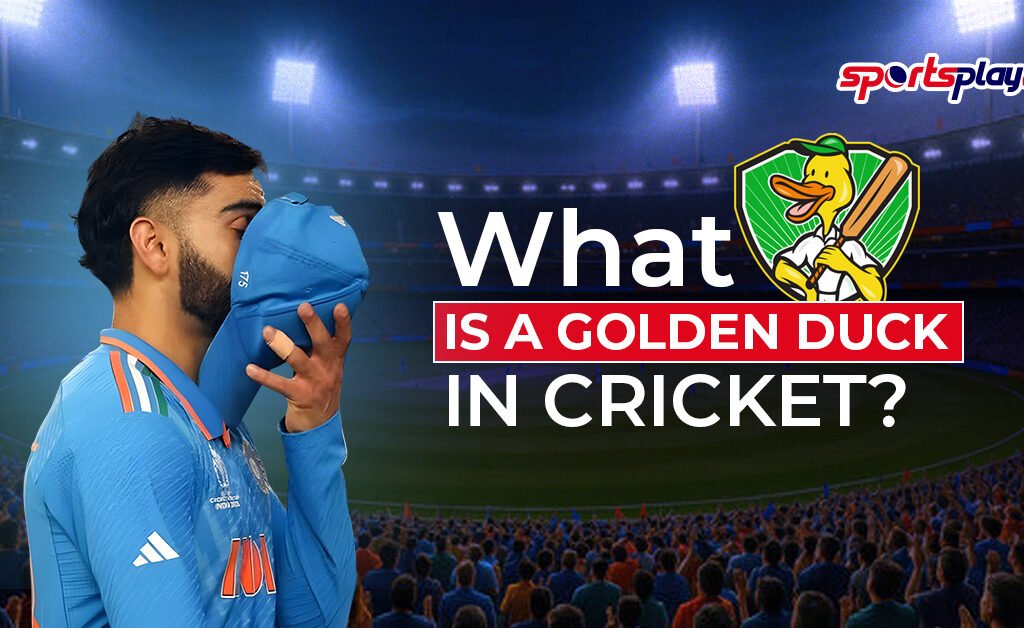
Cricket is full of memorable moments, but some are unforgettable for all the wrong reasons. One such moment is the Golden Duck in Cricket, a dismissal that happens before a batter can even score a run. Whether it occurs in a high-pressure final or an ordinary league match, a golden duck can instantly change the mood of the game. From its exact meaning and rules to famous players who have suffered it.
This guide explains everything in simple terms. Keep reading to understand why the golden duck is feared by batters and remembered by fans.
What Is a Golden Duck in Cricket?
A golden duck occurs when a batter is dismissed on the very first legal delivery they face. In cricket terminology, a duck refers to a score of zero. Most players consider a zero to be embarrassing enough. However, getting out on the first ball adds a layer of extreme disappointment.
What Is a Duck in Cricket?
A duck in cricket refers to a batter getting out without scoring any runs. The term comes from the shape of a 0, which resembles a duck’s egg. While a duck is disappointing for any player, it is a common occurrence in all formats of the game.
Famous Golden Duck Examples in Cricket History
Golden ducks hurt more when big players suffer on big stages. Because of that, these moments stay in memory.
| Player | Team | Format | Opponent | Match / Year |
| Sachin Tendulkar | India | ODI | Pakistan | 2002 |
| Virat Kohli | India | ODI | Sri Lanka | 2014 |
| Ricky Ponting | Australia | Test | England | 2005 Ashes |
| Brian Lara | West Indies | Test | Australia | 1999 |
| MS Dhoni | India | T20I | New Zealand | 2010 |
| Ben Stokes | England | Test | South Africa | 2016 |
| Kane Williamson | New Zealand | ODI | Australia | 2017 |
Players with Most Golden Ducks
Golden Ducks in Test Cricket
| Player | Team | Golden Ducks |
| Courtney Walsh | West Indies | 7 |
| Chris Martin | New Zealand | 6 |
| Stuart Broad | England | 6 |
| Glenn McGrath | Australia | 5 |
| Shane Warne | Australia | 4 |
Golden Ducks in ODI Cricket
| Player | Team | Golden Ducks |
| Wasim Akram | Pakistan | 5 |
| Chaminda Vaas | Sri Lanka | 4 |
| Muttiah Muralitharan | Sri Lanka | 4 |
| Courtney Walsh | West Indies | 3 |
| Glenn McGrath | Australia | 3 |
Golden Ducks in T20 Internationals
| Player | Team | Golden Ducks |
| Tim Southee | New Zealand | 4 |
| Shadab Khan | Pakistan | 3 |
| Lasith Malinga | Sri Lanka | 2 |
| Rashid Khan | Afghanistan | 2 |
| Mitchell Starc | Australia | 2 |
Types of Ducks in Cricket
Not all ducks are the same in cricket. Over time, fans, commentators, and statisticians have created specific terms to describe how a batter gets out for zero. These labels add depth to match analysis and make cricket statistics more interesting to follow.
- Golden Duck: A batter is dismissed on the very first legal ball they face. It is considered one of the most disappointing ways to get out because the player has no chance to settle at the crease.
- Diamond Duck: A batter is run out without facing a single delivery. This usually happens at the non-striker’s end and does not count as a ball faced, making it a rare and unlucky dismissal.
- Silver Duck: A batter gets out on the second ball they face. While slightly better than a golden duck, it still reflects a very short stay at the crease.
- Bronze Duck: A batter is dismissed on the third ball faced. This term is less commonly used but still appears in cricket discussions and statistics.
- Royal Golden Duck: A batter is dismissed on the first ball they face in both innings of the same match. This is extremely rare and often highlighted as an unfortunate record.
- Pair: A batter scores zero in both innings of a multi-innings match, usually in Test cricket. It indicates a complete batting failure across the match.
- King Pair: A batter records a golden duck in both innings of a Test match. This is considered the worst possible batting outcome and is very uncommon.
Key Takeaways About Golden Duck in Cricket
- A golden duck means out on the first ball for zero
- It applies in Test, ODI, and T20 cricket
- No-balls and wides do not count
- Great players have suffered golden ducks
- First-ball focus reduces the risk
Final Thoughts
The golden duck remains one of the most dramatic events in cricket. It reminds us that no player is ever too big for the game. Whether you are a beginner or a seasoned fan, seeing a golden duck is always a blink and you’ll miss it a moment. It highlights the fine margins between success and failure in professional sports. While it is a record no player wants, it is a vital part of the history and charm of cricket. Understanding this term helps you appreciate the tension every time a new batter walks to the crease.
FAQ’s
1. What is a golden duck in cricket?
A Golden Duck in Cricket occurs when a batter is dismissed on the very first ball they face without scoring any runs.
2. Does a golden duck count in all formats?
Yes. A golden duck applies in Tests, ODIs, and T20s whenever a batter gets out on their first delivery.
3. Is run-out considered a golden duck?
Yes. If a batter is run out on the first ball faced without scoring, it is still a Golden Duck in Cricket.
4. Who has the most golden ducks?
Several lower-order batters and aggressive openers hold high golden duck counts due to risky playing styles.

